WAG’ing the dog: Engineered signals to calibrate 4D expectations at Liza, Offshore Guyana
by Kirk Wagenvelt
Date: Wednesday 22 April
Time: 11:30 am – 1 pm
Location: Woodside Energy, 1500 Post Oak Blvd, Houston, TX 77056
Directions: Park in visitor parking and take a ticket; parking will be validated
Cost: $30 Members, $35 Non-members, $25 Students
Abstract:
The 2022-23 Stabroek OBN campaign included surveys over five development areas in offshore Guyana between October 2022 and November 2023, beginning and ending with surveys at the Liza field. The first survey denoted Liza node zero (N0) is intended as a seafloor 4D baseline, although at Liza, the only pre-production seismic data is from streamer surveys prior to the 2019 field startup. The second survey, Liza N1, provided our first look at seafloor 4D data in Guyana. Key objectives of N1 were focused on understanding the types and strengths of 4D signal available for interpretation and reservoir management—not only for Liza, but also for informing monitoring plans for the four other current Stabroek development areas. Understanding the detectability of 4D signals related to changes in pressure and fluid, especially water alternating gas (WAG) was an objective to inform monitoring frequency and data quality needs going forward. Modeling predicted moderate signals from both water and gas sweep. However, the detectability resulting from a combination of water plus gas sweep (or vice versa) was not yet established, and the extent to which injected gas would enter a miscible phase, versus a more readily detectable free phase was uncertain. Reservoir pressure maintenance is also part of the injection strategy ensuring pressure maintenance. Modeling showed weaker 4D signal from changes in reservoir pressure given Liza rock physics and reservoir simulation results. Under normal field operating conditions, and given the survey timings, the results of the 4D difference would continue to leave these questions unanswered. To increase the value of our early monitor, our subsurface geoscience and engineering teams coordinated with field operations and our geophysical operations team to deliberately induce WAG and pressure signals between N0 and N1. Two examples are shown here, where we timed WAG fluid switches, and an injection pressure increase specifically to appear on our 4D seismic monitor. By performing these tests relatively early in the life of Stabroek fields, we have begun quantitatively calibrating our 4D modeling and have informed the interpretability of these signals. We believe that having this information will better inform our 4D seismic monitoring decisions for years to come. A WAG injection switch at well 4i helped confirm modeling expected 4D signals with field observations (Figure 1). A pressure increase at another injector i8 was performed to understand reservoir compartmentalization in a particular reservoir segment. A pressure increase of ~1000 psi was achieved at the well during N1 and illuminated compartment boundaries.
Kirk A. Wagenvelt - Geoscientist, ExxonMobil
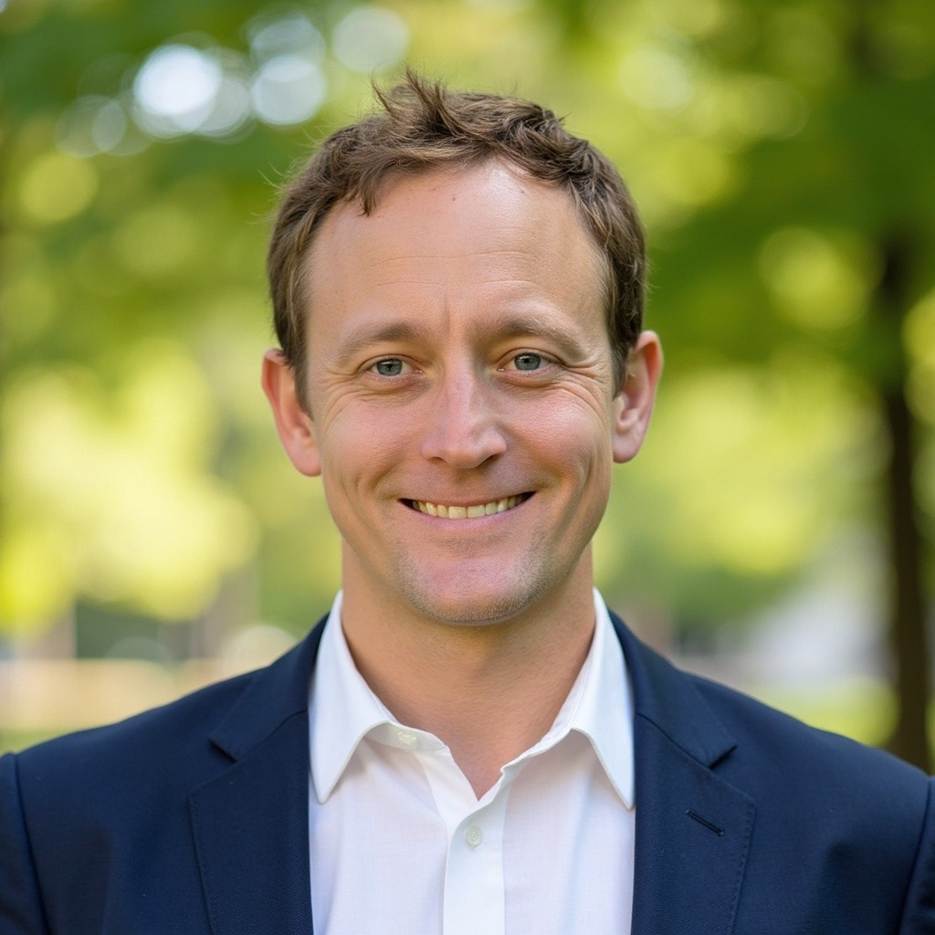
Kirk A. Wagenvelt is a Geoscientist at ExxonMobil with more than 15 years of experience spanning oil and gas exploration, production, development, and environmental remediation. He holds a B.S. in Geochemistry and an M.S. in Geology from Western Michigan University. Since joining ExxonMobil in 2015, Kirk has worked across numerous basins worldwide, with a strong focus on South America. Over the past five years, he has been a leading voice in advancing 4D seismic integration for opportunity generation and reservoir management in the Liza and Payara developments offshore Guyana. His work has significantly contributed to improving subsurface understanding and optimizing field performance by pushing the limits of proactive 4D seismic applications. In his current role as an Advisor on the Guyana Blockwide Value Team, Kirk delivers subsurface solutions across the Stabroek Block, helping shape current and future developments with a focus on maximizing recovery through 4D seismic interpretation and production data integration workflows. Kirk has been recognized both within ExxonMobil and by the broader geoscience community for his technical leadership and innovation. His notable contributions include the talk “WAG’ing the Dog: Engineered signals to calibrate 4D expectations at Liza, Offshore Guyana,” presented at the SEG 4D Forum and IMAGE.
No Document Available!
Register as a Non-Member Guest!
Go to the HGS Home Page and Login with Your User Name and Password and then Return to this Page in Order to Register as a Member or Guest of a Member. For Help Registering Contact the HGS Office or Email webmaster@hgs.org. Thank You!


